Österreich - Die ganze Geschichte
ORFIII-TV-Dokumentationsserie
Staffel 3 - Folge 4: Die Stimmen der Frauen / Episode 4: Women's Voices
Buch/Script: Carolin Pienkos
Regie/Direction: Florian M. Bayer
Interviews: Carolin Pienkos
Kamera/DOP: Carolin Liebhart, Maximilian Smoliner
Schnitt/Editing: Sarah Bernhardt
Sprecher/Narrator: Cornelius Obonya
Produktion: Pammer Flm
Fachbeirat/Historical Advisory Board: Univ.-Prof. i.R. Mag. DDr. Oliver Rathkolb, Prof. Priv.- Doz. Mag. Dr. Hannes Leidinger, Univ.-Prof. Dr.phil. Barbara Stelzl-Marx
Redaktion/Editorial Team ORFIII: Ernst Pohn, Alexander Apostolidis
49 Minuten, Original-TV-Premiere: Samstag 03.05.2025 ORF III
Folge 4: Die Stimmen der Frauen
Episode 4: Women’s Voices
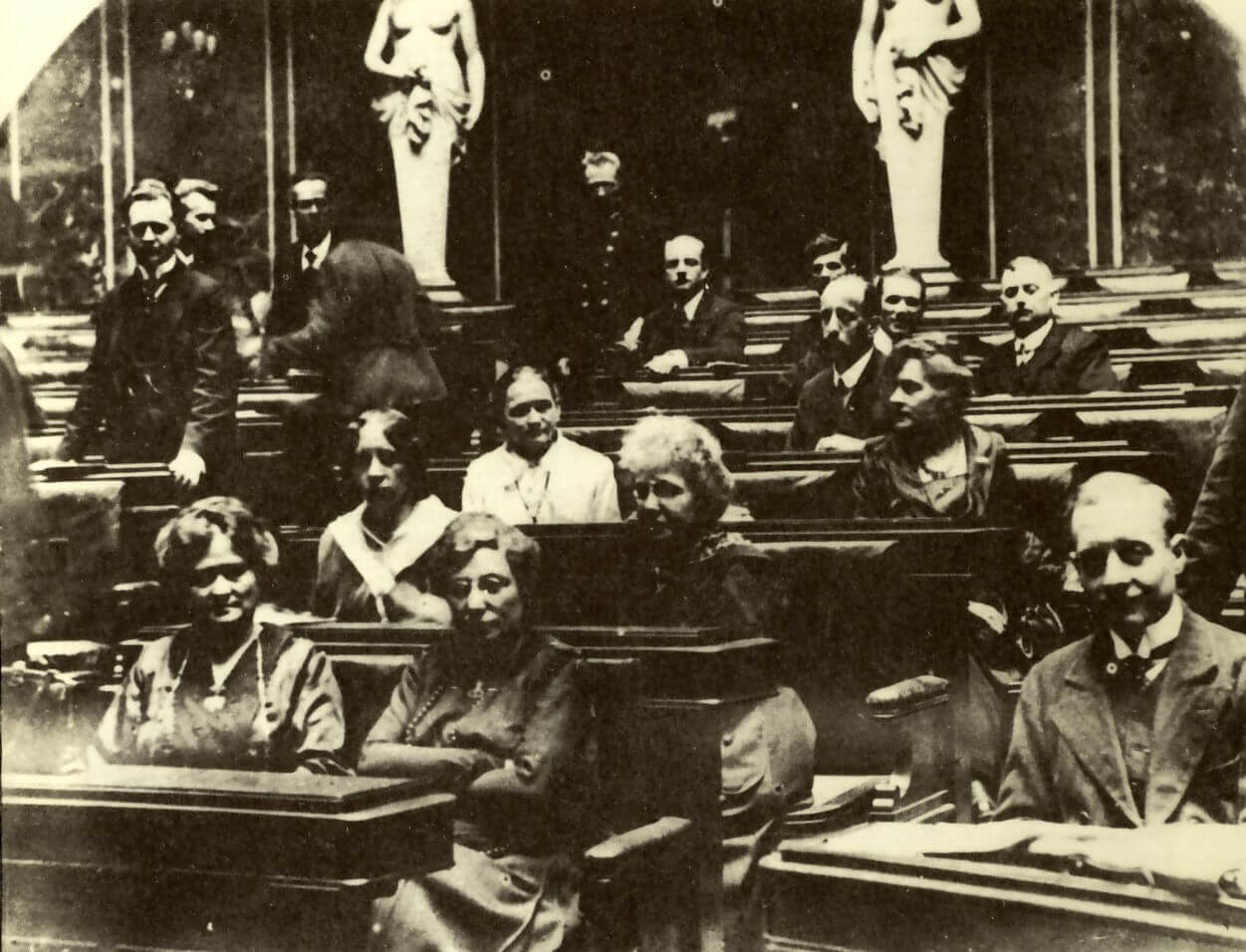
With the founding of the republic, women finally gained the right to vote, for which they had long fought. The Constituent National Assembly, elected on February 16, 1919, was the first parliament elected by women and men in free and equal elections. Eight women were elected to the National Council in 1919—seven Social Democrats and one Christian Social. After the war, often without social security and legally subordinate to their husbands, many women felt their situation was hopeless. Through their newly gained political voice, they hoped their problems would now be heard more clearly. But it was not only in politics that new opportunities for action emerged at that time. The Roaring Twenties swept into Austria and found expression in the theater performances, dances, and variety shows of the era. Josephine Baker’s tours caused a stir, and women’s sexuality and sex education in general became the focus of attention. But the window of opportunity for women’s self-determination was soon to close again. Episode four of the ORF III historical documentary series “Austria – The Whole Story” follows Anna Boschek, a trade unionist from a poor background who, upon becoming a member of the National Council in 1919, first had to familiarize herself with parliamentary customs, and the young actress and theater director Stella Kadmon, who led a life of self-determination unusual for her time until she left Austria due to changing political circumstances.