Österreich - Die ganze Geschichte
ORFIII-TV-Dokumentationsserie
Staffel 3 - Folge 5: Die große Depression/Episode 5: The great depression
Buch & Regie/Script and Direction: Carolin Pienkos
Kamera/DOP: Marco Zimprich
Schnitt/Editing: Sarah Bernhardt
Sprecher/Narrator: Cornelius Obonya
Produktion: Pammer Fim
Fachbeirat/Historical Advisory Board: Univ.-Prof. i.R. Mag. DDr. Oliver Rathkolb, Prof. Priv.- Doz. Mag. Dr. Hannes Leidinger, Univ.-Prof. Dr.phil. Barbara Stelzl-Marx
Redaktion/Editorial Team ORFIII: Ernst Pohn, Alexander Apostolidis
49 Minuten, Original-TV-Premiere: Mai 2025 ORF III
Folge 5: Die große Depression
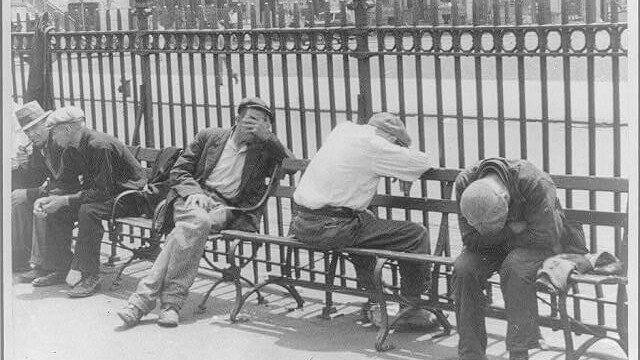
Bereits seit zwei Jahren steckt die Welt in einer globalen Wirtschaftskrise, als im Mai 1931 eine Hiobsbotschaft über Österreich hereinbricht. Die Credit-Anstalt, die größte Bank Kontinentaleuropas ist zahlungsunfähig und droht Österreich in einen Staatsbankrott zu stürzen. Das alles trifft auf eine Gesellschaft, die seit dem Ende des Ersten Weltkriegs in einem dauernden Krisenmodus lebt. Das Land gilt bereits als eines der Armenhäuser Europas, nun erreicht die Welle der globalen Wirtschaftskrise Österreich mit voller Wucht. Die fünfte Folge der ORF-III-Erfolgsserie "Österreich - die ganze Geschichte" zeigt, wie unmittelbar wirtschaftlicher Misserfolg und politische Destabilisierung zusammenhängen und folgt den Schicksalen zweier sehr unterschiedlicher Protagonisten der damaligen Zeit. Ludwig von Mises, Kronprinz der Österreichischen Schule der Nationalökonomie und einer der einflussreichsten Ökonomen des 20.Jahrhunderts ist überzeugt, dass staatliche Investitionen oder Sozialleistungen die Entfaltung der Marktkräfte blockieren. Das Gegenteil glaubt die junge und idealistische Sozialdemokratin und Soziologin Marie Jahoda. Sie empfindet die Auswüchse des Kapitalismus als obszön und widmet sich mit der berühmten Studie "Die Arbeitslosen von Marienthal" den Auswirkungen von Arbeitslosigkeit auf die betroffenen Menschen. Am Ende müssen sowohl von Mises, als auch Marie Jahoda vor den Nationalsozialisten aus Österreich fliehen.
Episode 5: The Great Depression
The world had already been mired in a global economic crisis for two years when, in May 1931, devastating news struck Austria. The Credit-Anstalt, the largest bank in continental Europe, had become insolvent and threatened to plunge Austria into national bankruptcy. All of this hit a society that had been living in a state of constant crisis since the end of World War I. The country is already considered one of Europe’s poorhouses; now the wave of the global economic crisis hits Austria with full force. The fifth episode of the ORF III hit series “Austria—The Whole Story” shows how closely economic failure and political destabilization are linked and follows the fates of two very different protagonists of that era. Ludwig von Mises, the crown prince of the Austrian School of Economics and one of the most influential economists of the 20th century, is convinced that government investment or social welfare programs hinder the free play of market forces. The young and idealistic Social Democrat and sociologist Marie Jahoda believes the opposite. She finds the excesses of capitalism obscene and, in her famous study “The Unemployed of Marienthal,” examines the effects of unemployment on those affected. In the end, both von Mises and Marie Jahoda are forced to flee Austria to escape the Nazis.